The Privilege of Approach from the Sea
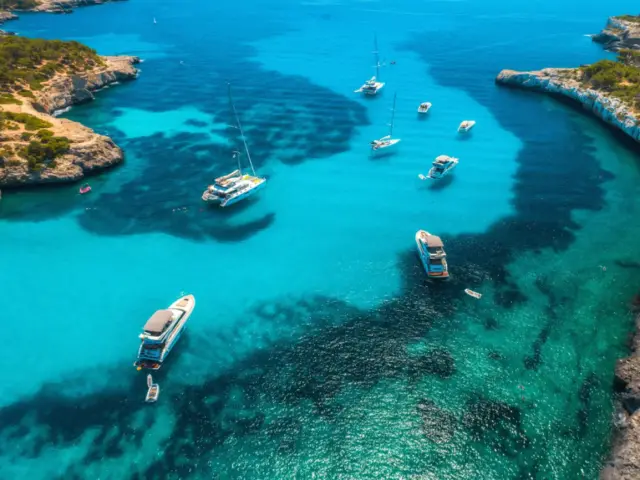
Mallorca has 345 kilometres of coastline, yet the vast majority of visitors experience only the beaches accessible by car. The island's true treasures — the calas that appear on no road map, the coves where the water turns an impossible shade of emerald, the cliff-backed bays where the only sound is the anchor chain running — these are reserved for those who approach from the sea.
At Bluebnc Yachting, a yacht charter company based in Palma de Mallorca with a managed fleet of motor yachts on the island, our captains know these hidden coastlines well. What follows is not a list compiled from guidebooks — it is operational knowledge, refined through our work, that we share with our charter guests to create experiences impossible to replicate from land.
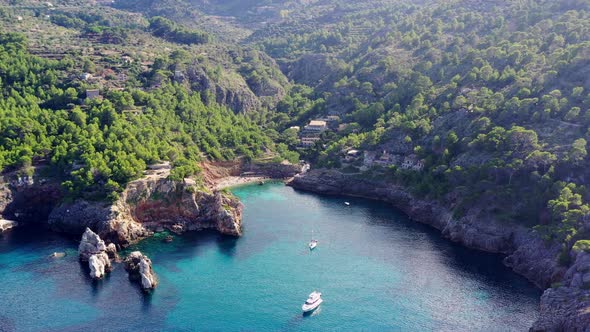
The Northwest Coast: Serra de Tramuntana's Hidden Bays
Cala Deià
Coordinates: 39°45'N, 2°38'E | Depth: 5–12m over sand and rock | Best wind: S/SE
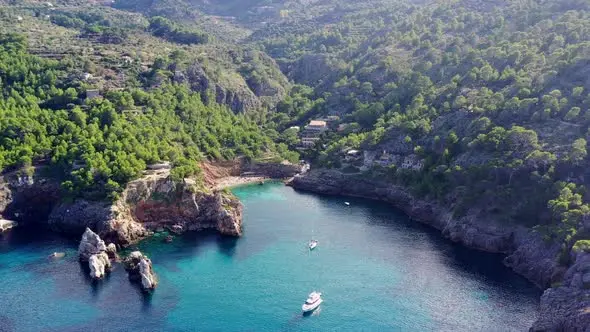
Cala Deià is perhaps Mallorca's most photographed cove — a narrow inlet flanked by steep, pine-covered cliffs where the water shifts between deep blue and crystalline turquoise depending on the time of day. The beach itself is tiny (perhaps 70 metres of pebble), and while it can be reached on foot via a steep 20-minute descent from the village, arriving by tender from your anchored yacht transforms the experience entirely.
The anchorage sits in 8–10 metres over a mixed bottom. In settled conditions (south or southeast winds), it is perfectly protected. The restaurant Ca's Patró March, perched on the rocks above the water, serves some of the finest fresh fish on the island — grilled on an open fire and served with nothing more than lemon and sea salt. Reserve for lunch; arrive by tender.
Sa Calobra & Torrent de Pareis
Coordinates: 39°51'N, 2°48'E | Depth: 15–25m, exposed | Best wind: S/SW, calm conditions only
The approach to Sa Calobra by sea is one of the most dramatic in the Mediterranean. The cliffs of the Serra de Tramuntana rise vertically from the water to over 800 metres, creating a sense of scale that photographs cannot capture. The Torrent de Pareis — a deep gorge that opens directly onto a pebble beach — is accessible only in calm conditions, but when the sea cooperates, it is an experience of almost spiritual intensity.
This is not an anchorage for overnight stays. The bottom drops away steeply, the fetch from the northwest is significant, and conditions can change rapidly. Our captains treat Sa Calobra as a morning visit: arrive early, deploy the tender, explore the gorge, and depart before the afternoon thermal builds. The reward is worth the planning.
Port de Valldemossa
Coordinates: 39°43'N, 2°37'E | Depth: 6–10m over sand | Best wind: E/SE
Below the famous hilltop village of Valldemossa lies a tiny fishing port that most tourists never discover. The road down is narrow, steep, and barely passable by car — but from the sea, it presents a perfect lunch anchorage. The single restaurant (Es Port) serves paella and fresh fish to a handful of tables overlooking the water. Anchor in 8 metres, take the tender ashore, and spend two hours in a Mallorca that has not changed in fifty years.
The Northeast: Turquoise Pools and Pine-Fringed Calas
Cala Varques
Coordinates: 39°28'N, 3°18'E | Depth: 4–8m over white sand | Best wind: W/NW
Cala Varques is the cala that appears on every "secret beaches" list — yet remains genuinely difficult to reach by land (a 25-minute walk through private farmland). By yacht, you simply anchor 100 metres offshore in 6 metres of crystal-clear water over white sand, and swim or tender to the beach. The water here achieves a Caribbean-like turquoise that seems impossible at 39° North.
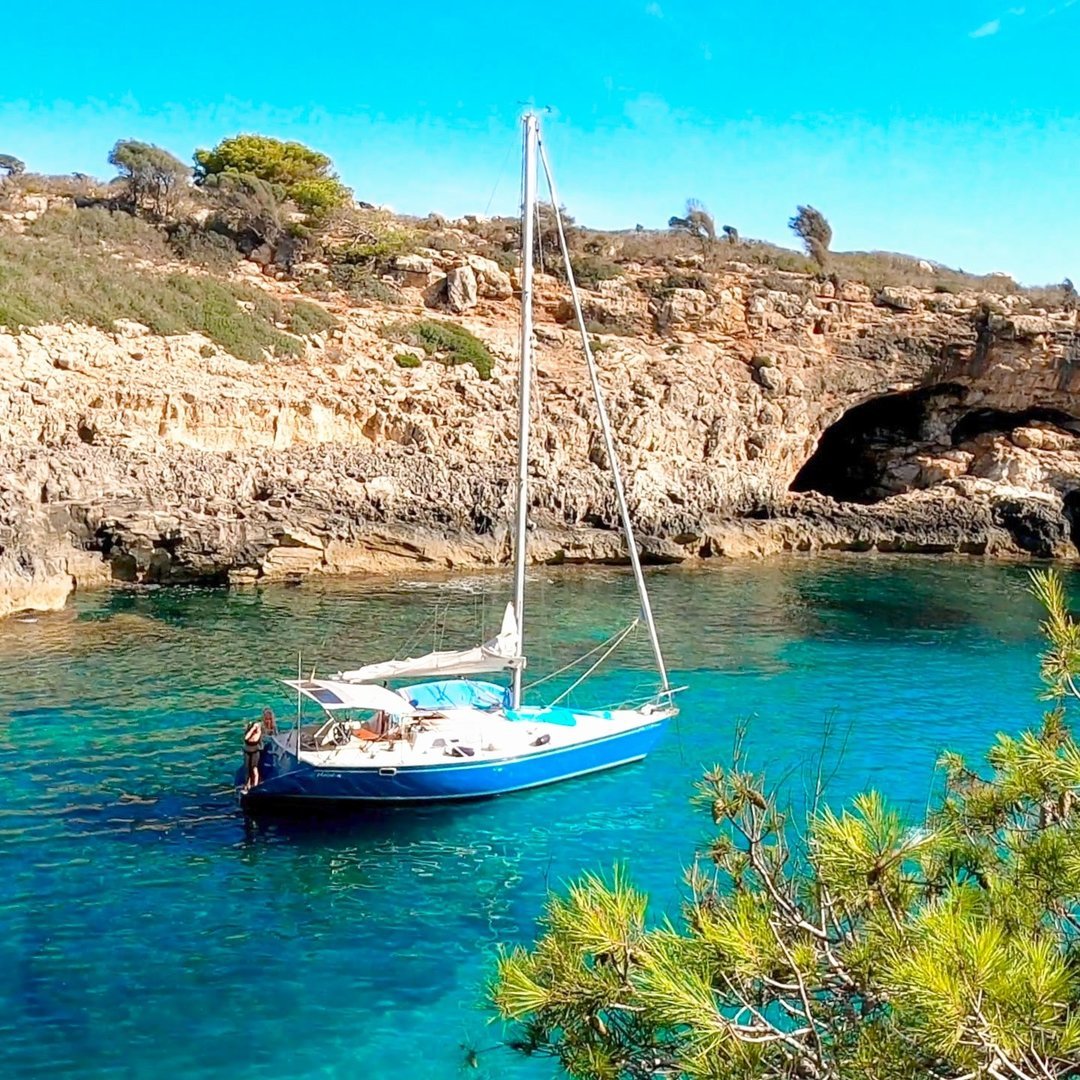
The cave system at the southern end of the cala is worth exploring by paddleboard or snorkel — a series of sea caves with bioluminescent algae that glow in the darkness. The anchorage is well-protected from westerly winds but exposed to the east; our captains monitor conditions carefully and will suggest alternatives (Cala Romantica or Cala Anguila) if the forecast shifts.
Cala Mondragó
Coordinates: 39°21'N, 3°11'E | Depth: 5–10m over sand and Posidonia | Best wind: N/NW
Within the Mondragó Natural Park, this double-cala system offers two distinct beaches connected by a coastal path. S'Amarador (the southern beach) is the more dramatic — a wide sweep of white sand backed by low dunes and pine forest. The anchorage is spacious but requires careful positioning to avoid the Posidonia meadows (anchoring over Posidonia is prohibited and carries fines up to €40,000).
Our captains use designated sandy patches between the seagrass beds, or eco-moorings when available. The snorkelling over the Posidonia is exceptional — the meadows harbour wrasse, octopus, and occasionally seahorses.
Cala Mesquida
Coordinates: 39°44'N, 3°26'E | Depth: 8–15m over sand | Best wind: S/SW
The largest undeveloped beach on Mallorca's northeast coast, Cala Mesquida offers a 300-metre sweep of golden sand backed by dunes and a nature reserve. The anchorage is deep (10–15m) and well-protected from southerly winds. In June and September, you may be the only yacht here. The beach has a single chiringuito (beach bar) and nothing else — just sand, dunes, and the sound of the sea.
The South Coast: The Calm Side
Es Trenc
Coordinates: 39°21'N, 2°58'E | Depth: 3–6m over sand | Best wind: N/NE
Es Trenc is Mallorca's longest natural beach — 3 kilometres of white sand and shallow turquoise water that, from a yacht anchored 200 metres offshore, looks indistinguishable from the Caribbean. The beach is technically accessible by car (via a long walk from the car park), but the experience from the water is entirely different: you anchor in 4 metres of gin-clear water, swim to shore, and have the run of a beach that stretches to the horizon in both directions.
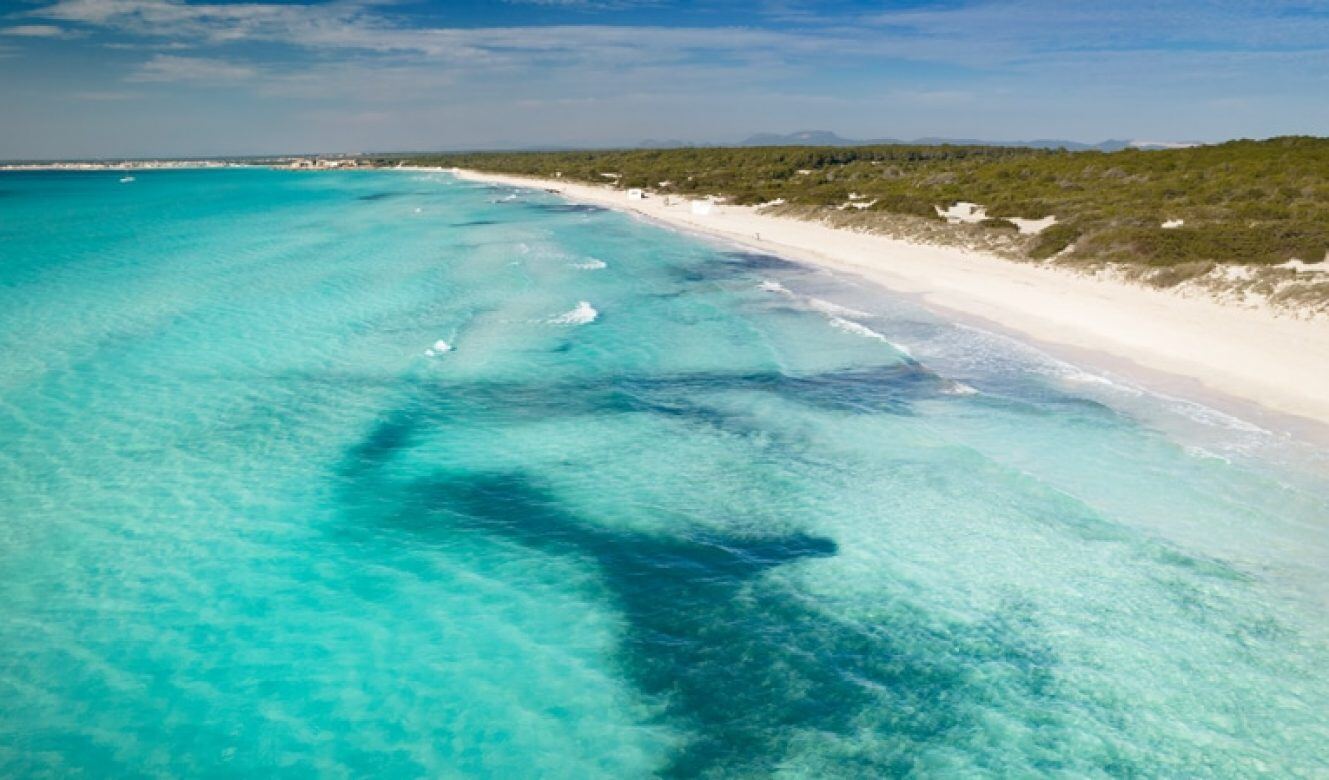
The salt flats (Salines de Llevant) behind the beach produce some of Spain's finest flor de sal — the yacht chef can source it directly from the local cooperative. The anchorage is shallow and exposed to southerly winds; in northerly conditions, it is perfectly flat and ideal for water toys.
Cala Pi
Coordinates: 39°22'N, 2°50'E | Depth: 6–10m at the entrance | Best wind: N/NW/NE
A dramatic fjord-like inlet on the south coast, Cala Pi cuts 200 metres inland between vertical limestone cliffs. The water inside is deep, still, and an almost supernatural shade of blue-green. The beach at the head of the inlet is small (30 metres) and accessed from the village above by a long staircase — or by tender from your yacht anchored at the mouth of the inlet.
This is one of Mallorca's most atmospheric anchorages at sunset, when the cliffs turn gold and the water darkens to indigo. Not suitable for large vessels (the entrance narrows to 40 metres), but perfect for yachts up to 25 metres.
The Southwest: Dramatic Cliffs and Hidden Pools
Illa del Sec
Coordinates: 39°31'N, 2°27'E | Depth: 8–12m over rock and sand | Best wind: E/NE
A small island 500 metres off the southwest coast, Illa del Sec creates a natural pool between itself and the mainland that is one of Mallorca's finest swimming spots. The water is deep enough for diving (12m on the seaward side) and shallow enough for snorkelling on the landward side. In calm conditions, you can anchor between the island and the coast in perfect shelter.
This is a spot known almost exclusively to local yachtsmen and the Bluebnc fleet. No road reaches the nearest point on shore; no tour boat visits. It is, in the truest sense, a yacht-only destination.
Sa Foradada
Coordinates: 39°44'N, 2°34'E | Depth: 12–20m, exposed | Best wind: E/SE, calm only
The pierced rock of Sa Foradada — a peninsula with a natural arch visible from the sea — is one of Mallorca's most iconic landmarks. The anchorage below is deep and exposed, suitable only in settled conditions, but the visual drama is unmatched. The restaurant on the cliff above (accessible only by a 45-minute hike or by helicopter) serves grilled lamb and local wine with views that extend to Ibiza on clear days.
Practical Considerations for Yacht-Only Beaches
Accessing these hidden calas requires specific knowledge and equipment:
- Tender quality matters: A fast, stable tender (Williams or Highfield 4m+) with a reliable outboard is essential for accessing beaches from offshore anchorages.
- Posidonia awareness: Anchoring over Posidonia seagrass is illegal in the Balearics. Our captains use detailed bathymetric charts and real-time seabed cameras to identify sandy patches.
- Weather windows: Many of these anchorages are exposed to specific wind directions. Our charter team builds flexible itineraries that adapt to the daily forecast.
- Early arrival: In July and August, the most popular yacht-only calas (Cala Varques, Es Trenc) fill by 10:00. Our captains recommend departing by 08:00 to secure the best positions.
Frequently Asked Questions
Which Mallorca beaches can only be reached by boat?
Strictly boat-only beaches include Illa del Sec, several coves along the Tramuntana coast between Valldemossa and Deià, and the western face of Cap de Formentor. Beaches like Cala Varques and Sa Calobra are technically reachable on foot but are dramatically easier and more enjoyable by yacht.
Is it legal to anchor anywhere in Mallorca?
Anchoring is free throughout most of Mallorca's coastline, but it is strictly prohibited over Posidonia seagrass meadows. Designated marine reserves (Cabrera, parts of Dragonera) require permits. Fines for anchoring over Posidonia range from €100 to €40,000.
What is the best yacht size for exploring Mallorca's calas?
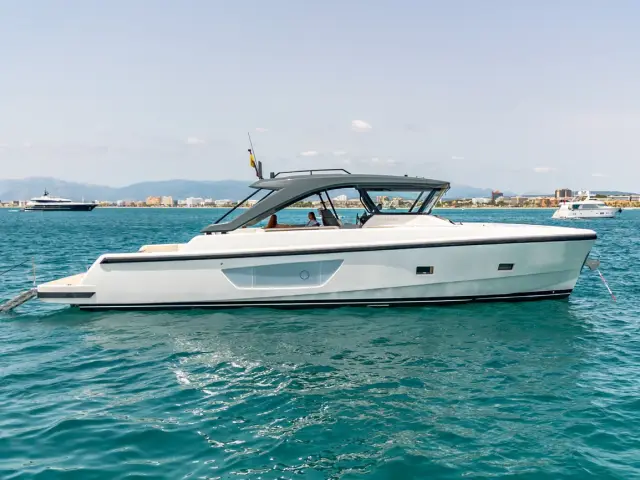
Yachts between 18 and 28 metres offer the ideal balance: large enough for comfort and a quality tender, small enough to access narrow inlets and shallow anchorages. Bluebnc's fleet of motor yachts in this range is specifically selected for Balearic cruising.
Can you swim at Mallorca's yacht-only beaches year-round?
The swimming season runs from May (18°C) through October (22°C), with peak temperatures of 26–28°C in August. April and November are possible for hardy swimmers but not recommended for extended water activities.
Discover Mallorca's Hidden Coastline
Our captains know every cala, every anchorage, every secret swimming spot on this island. Let us build a bespoke itinerary that takes you to the Mallorca that most visitors never see.
View Mallorca Itineraries Plan Your Charter